Inference pricing spread 100× in 2026. Here's what every major model actually costs and how to route smarter.
The Inference Cost War: Why Token Pricing Is Now the Real AI Battleground
The race for AI capability is mostly over. The race for AI economics is just beginning — and the spread between the cheapest and most expensive frontier models has reached 100× or more. That gap is not a rounding error; it is a product strategy question every engineering team needs to answer now.
Why Inference Cost Is the New Moat
For the past three years, the AI race was fought on benchmarks: which model passed the bar exam, scored highest on coding evals, or handled the longest context. That era is compressing — not because quality stopped mattering, but because the gap between top models has narrowed enough that cost per token is now the decisive variable for anyone building a real product.
When you are running thousands of agent calls a day across customer support, document processing, or code review pipelines, a 100× difference in inference pricing is not a line item — it is a business model question. Cheap inference unlocks use cases that were never viable at $25–30 per million output tokens. It changes who can afford to scale.
Where Every Major Model Sits Right Now (June 2026)
The pricing landscape reshuffled significantly in April–May 2026. Here is the current output tier, cheapest to most expensive:
| Label | USD per 1M output tokens |
|---|---|
| DeepSeek V4 Flash | 0.28 |
| Xiaomi MiMo-V2.5 | 0.28 |
| DeepSeek V4 Pro | 0.87 |
| Kimi K2.5 | 3 |
| Claude Opus 4.8 | 25 |
| GPT-5.5 | 30 |
The two cheapest flagship-class options — DeepSeek V4 Flash and Xiaomi MiMo-V2.5 — both land at $0.14 input / $0.28 output per million tokens, verified as of June 27, 2026. At the other end, GPT-5.5 runs $5 input / $30 output, and Claude Opus 4.8 sits at $5 input / $25 output. That is a 90–100× spread on output tokens between the cheapest and most expensive options.
Key model rates at a glance (input / output per million tokens):
- DeepSeek V4 Flash — $0.14 / $0.28 (cache hits drop to $0.003 input, automatic)
- DeepSeek V4 Pro — $0.435 / $0.87 (flagship reasoning, 1M context)
- Xiaomi MiMo-V2.5 — $0.14 / $0.28 (matched DeepSeek Flash pricing May 2026)
- MiniMax M3 — $0.30 / $1.20 (1M context, native image/video input)
- Kimi K2.5 / K2.6 — $0.60 / $3.00 and $0.95 / $4.00 respectively (open-weight MoE, agentic coding focus)
- Gemini 3.1 Pro — $2.00 / $12.00 (doubles above 200K tokens)
- GPT-5.5 — $5.00 / $30.00 (1M context, 90% cached input discount)
- Claude Opus 4.8 — $5.00 / $25.00 (1M context, no long-context surcharge)
What Actually Changed in 2026
Three structural shifts arrived at once.
DeepSeek V4 dropped April 24. Two models replaced the entire legacy lineup: V4 Flash for cost-first workloads, V4 Pro for frontier reasoning. Both carry a 1M token context window as the standard floor — not a premium tier. The old deepseek-chat and deepseek-reasoner aliases will stop working July 24, 2026; any team still using them needs to migrate now.
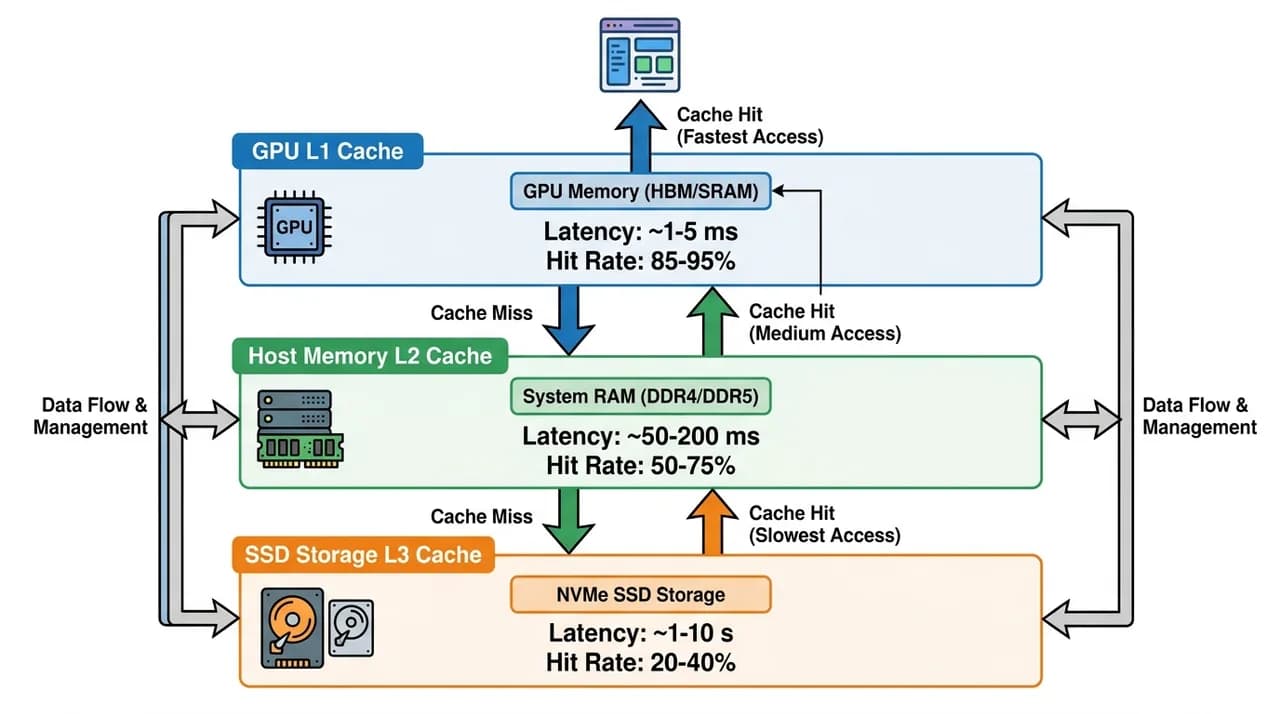
Xiaomi matched the floor. Effective May 27, 2026, Xiaomi cut MiMo-V2.5 API pricing to match DeepSeek V4 Flash exactly — $0.14 input / $0.28 output. The engineering behind this matters: the team rebuilt the KV cache architecture using SGLang HiCache and Sliding Window Attention, reducing GPU-to-SSD data transfer to roughly one-seventh of prior levels while increasing cacheable token capacity by 5×. A co-located distributed cache called GCache, deployed directly on SSDs inside GPU machines, adds zero extra storage cost. This is disciplined infrastructure engineering, not a promotional discount.
Kimi K2.6 opened up the agentic tier. Moonshot AI's April 2026 release is a 1-trillion-parameter MoE model with only 32B parameters active per forward pass — which is why the pricing stays competitive despite the scale. At $0.95 input / $4.00 output, it sits between DeepSeek Pro and Western flagship models, with agent swarm capabilities that scale to 300 parallel sub-agents and 4,000 coordinated steps.
The Counterintuitive Part: Cheapest Per Token ≠ Cheapest Per Task
In complex agentic workflows, the model's task success rate directly determines total token consumption. A higher-priced model that produces correct code on the first attempt may consume fewer tokens than a cheap model that requires three to five rounds of retry, error correction, and debugging.
Kimi K2.6 is a relevant example. On SWE-bench Pro it scores 58.6% — ahead of GPT-5.5 on that specific benchmark — and its 300-agent swarm architecture is purpose-built for long-horizon tasks. For a team running autonomous coding pipelines, the $4.00 output rate may deliver better economics than a $0.28 model with a much lower success rate on complex tasks.
The same logic applies in reverse. For classification, summarization, structured extraction, or any task where a smaller model reliably succeeds, routing to DeepSeek V4 Flash or Gemini 3.1 Flash-Lite ($0.25 input / $1.50 output) and reserving Opus or GPT-5.5 for genuinely hard cases cuts the total bill far more effectively than picking one model for everything.
| Label | USD total |
|---|---|
| DeepSeek V4 Flash | 0.42 |
| Xiaomi MiMo-V2.5 | 0.42 |
| DeepSeek V4 Pro | 1.31 |
| Kimi K2.5 | 3.6 |
| Claude Opus 4.8 | 30 |
| GPT-5.5 | 35 |
The winning architecture is not "use the cheapest model." It is: match model capability to task complexity, then optimize per tier.
What This Unlocks for Businesses Right Now
The inference cost compression has immediate, practical implications for any team building on AI:
- Customer support agents — At sub-$1 combined per million tokens, running a fully autonomous support agent across thousands of daily tickets is economical, not experimental.
- Document processing pipelines — Long-context models like Kimi K2.6 and DeepSeek V4 make processing dense contracts or research reports at scale viable at a fraction of prior costs.
- Coding assistants and dev tooling — Agent pipelines with stable system prompts are the biggest beneficiaries of cache-hit optimization. DeepSeek V4 Flash's cache-hit rate drops input to $0.003/M — a 98% reduction on repeated prefixes.
- Internal knowledge retrieval — RAG pipelines that previously hit budget ceilings can now run continuously. MiniMax M3 at $0.30/$1.20 with native 1M context makes retrieval-heavy pipelines structurally cheaper.
These are not hypothetical use cases. They are the ones teams shelved twelve months ago because the unit economics did not work.
The Next Wave of AI Headlines Won't Be About Models
The announcements that defined 2023 and 2024 were model releases. What is driving 2026 is chips, cache infrastructure, and inference margins. Custom silicon, proprietary caching systems, and datacenter co-location deals are the new competitive moats.
If inference costs continue toward marginal cost — and the trajectory from the Chinese providers suggests they will — value creation shifts away from the model weights and toward data integration, tooling, security, and vertical expertise. That is where real product differentiation lives: not in what the model knows, but in what you build around it.
The Bottom Line
AI has crossed the threshold from research spectacle to infrastructure commodity — and infrastructure races are won on margins, not magic. The decisions that determine your product's unit economics are now being made at the inference layer. Whether that means DeepSeek V4 Flash for high-volume agent subtasks, Kimi K2.6 for long-horizon coding, or Opus 4.8 for the reasoning tasks where quality actually justifies the premium — the answer is different per workload, and getting it right matters.
At Kovazu, we build AI products with the same engineering discipline driving this shift — tight inference architecture, smart model routing, and systems designed to stay economical as they scale. If you are ready to build AI that works at production cost, let's talk.
Written by
Ritvik NairAI Developer & Technology Writer
Ritvik Nair is passionate about artificial intelligence, automation, software development, and the technologies shaping the future. He enjoys exploring new AI models, developer tools, and emerging innovations, turning complex technical concepts into content that's clear, practical, and engaging. Whether he's writing about large language models, productivity tools, or the latest breakthroughs in tech, Ritvik focuses on helping readers understand not just how technology works, but how it can be applied in the real world. He believes great tech content should be insightful, accessible, and genuinely useful.
Keep reading
 Artificial Intelligence
AI Desktop Agents: The Rise of Computer-Use AI in 2026
AI agents are moving beyond chat to operate computers, apps, and workflows themselves. Here's what Grok Bot, Claude, and OpenAI's computer-use agents mean for desktop automation in 2026.
 Artificial Intelligence
Mac vs NVIDIA for Local AI: Which Is Better in 2026?
We compare Apple Silicon and NVIDIA GPUs for local AI, using an M5 Mac with 64GB memory and an RTX 5090 with 32GB VRAM to test speed, model size, fine-tuning, power, and cost.
 Artificial Intelligence
How to Use AI in Everyday Life: 30 Practical Ideas
Discover 30 practical ways to use AI in everyday life - from work, studying, and travel to writing, productivity, and smartphone tasks. Learn how AI can save time, boost creativity, and simplify your daily routine.